The Guelph Barrier Free Committee’s (GBFC) mission is to help our community attain inclusion, equality, access and independence for all persons with disabilities residing in or visiting Guelph, by addressing accessibility related topics.
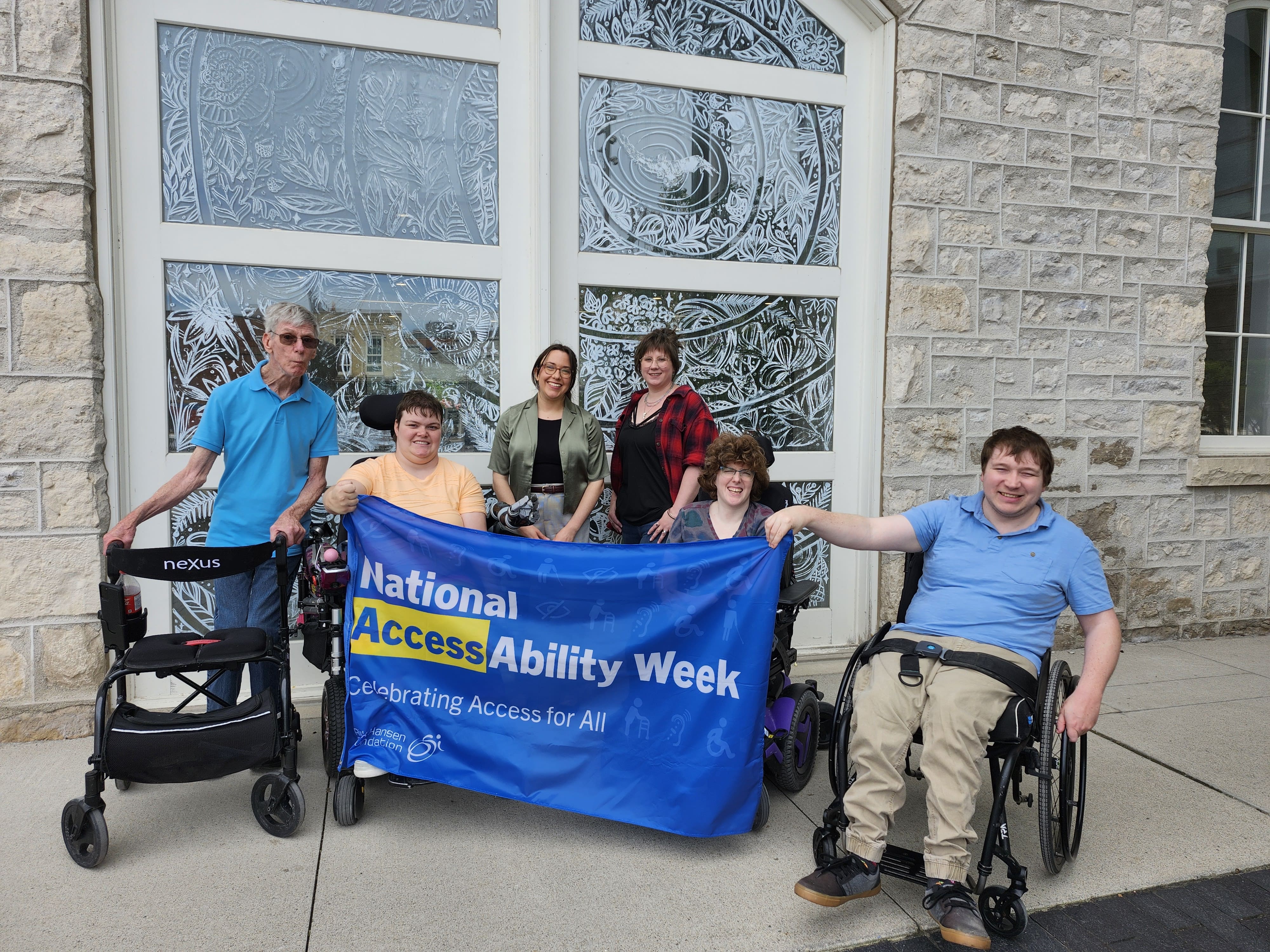
A commitment to accessibility
The GBFC works to help attain inclusion, equality, access, and independence for all people with disabilities in, or visiting, Guelph through supportive education and offering guidance on solutions.
The Committee carries out its mission by seeking ways of sharing potential solutions that are integrated, raise awareness, and effectively build healthy, barrier-free communities.
Our history
2026
New members elected to positions.
In January, Meg Harding and Maddy Workman accepted the roles of Chair and Secretary-Treasurer.
2025
The GBFC’s website gets some new updates.
The GBFC hosts the first Map Mission with AccessNow.
A community-lead event where participants had the chance to explore our local downtown to share information about its accessibility and highlight features within the AccessNow app.
2011
The first bus stop trivia hop takes place
Inspired by “The Amazing Race”, the GBFC hosted an even where participants could sign up for a fun afternoon to learn about City buses in Guelph. With the help of a volunteer, participants traveled around the city on a conventional bus completing trivia activities at each stop.
Guelph Transit also offered a relaxed way to get on and off a conventional, low-floor city bus without the pressure of other riders. Attendees learned about Guelph’s bus routes, including the Community Bus. It took place at Guelph Central Station on Carden Street.
2005
GBFC and AAC become their own entity
With expected changes in members of these two committees, it wasn’t fair to expect those appointed to the AAC to also become involved in the GBFC. Early in 2005 the two committees divided the tasks and responsibilities. The GBFC would focus on advocating/advising with private organizations/businesses, while the AAC would focus advising the municipality (the City of Guelph).
At the end of 2005 the Committee decided to amalgamate the Barrier Free Committees as tasks of each committee had been significantly reduced with the development of the AAC.
2004
Guelph Wellington Barrier Free drops “Wellington” and becomes Guelph Barrier Free Committee (GBFC)
The Guelph Wellington Barrier Free Committee became incorporated and adopted the new name of Guelph Barrier Free Committee. Since the establishment of the Accessibility Advisory Committees in Wellington County, and fewer committee members from County focused organizations, the GWBFC membership moved to focus their work on barriers in the City of Guelph.
2002
The first iteration of the Guelph Barrier Free Committee website is developed.
2001
Guelph Wellington Barrier Free and the City of Guelph Accessibility Advisory Committee (AAC)
the Ontarians with Disabilities Act 2001 became law. This Act required municipalities the size of Guelph to establish a committee meeting the standard of a majority of member to have a disability. The most logical choice for Guelph City Council was to ask the Guelph Wellington Barrier Free Advisory Committee members to also take on the tasks under this new law. All committee members were appointed to the Guelph Accessibility Advisory Committee (AAC), a Committee of City Council.
Members met six times a year on each of the Advisory Committees.
1994
Barrier Free Committee grew to several members. The membership included organizations who offer support to people with disabilities and interested individuals (majority had a disability) from Guelph and surrounding area. As a result, barriers were identified With the knowledge of the people on the committee, it seemed appropriate for the Barrier Free Committee to take on an advocacy role based on the topics named in the NAAW initiative. This led to the development of 4 committees:
- Advisory Committee,
- Transportation Committee,
- Education Committee, and
- Recreation Committee
The mandates of these committees were to address concerns in both the City of Guelph and Wellington County, with municipal government, and private organizations/businesses. NAAW also included housing and employment, however these were not taken on by the committee as several organizations that address these topics already existed. At this time the committee met 10 times a year as the Advisory Committee and as needed throughout the year as the other committees.
1993
Guelph Services for Persons with Disabilities (now Guelph Independent Living) staff person Leanne Warren and City of Guelph Disability Support staff Betty Richard call the first meeting of the Barrier Free Committee to continue the recognition and education programs that took place under NAAW (National AccessAbility Week).
